Norman, OK – A lot can change in one offseason, and in Norman it felt like everything did.
Coming off another bitter playoff loss to his younger brother Tug and the Georgia Bulldogs, Oklahoma head coach Lovie Mahawg watched the depth chart get turned upside down. The first-, second-, and third-string quarterbacks all entered the portal. Key role players followed. The pursuit of Michigan State transfer Leo Hannan ended in disappointment when he chose USC. Jake Wakefield and Rian Ferris headed to Michigan, while Colm Inmupantz opted to sit behind Bryce Underwood elsewhere.
It was chaos by modern standards.
Mahawg never flinched.

“We weren’t going to chase ghosts,” Mahawg said. “If guys want to leave, that’s their choice. Our job is to build something that lasts, not something that panics.”
So the Sooners pivoted. They retained their offensive coordinator, scrapped the conservative balance of the past, and leaned fully into a pass-heavy identity inspired by the late Mike Leach. Fittingly, the first test of this new era came under the lights in Week 0, with No. 22 Miami walking into Norman looking to spoil the experiment.
Instead, Oklahoma detonated it.
A Quarterback Nobody Knew, Running an Offense Everyone Recognized
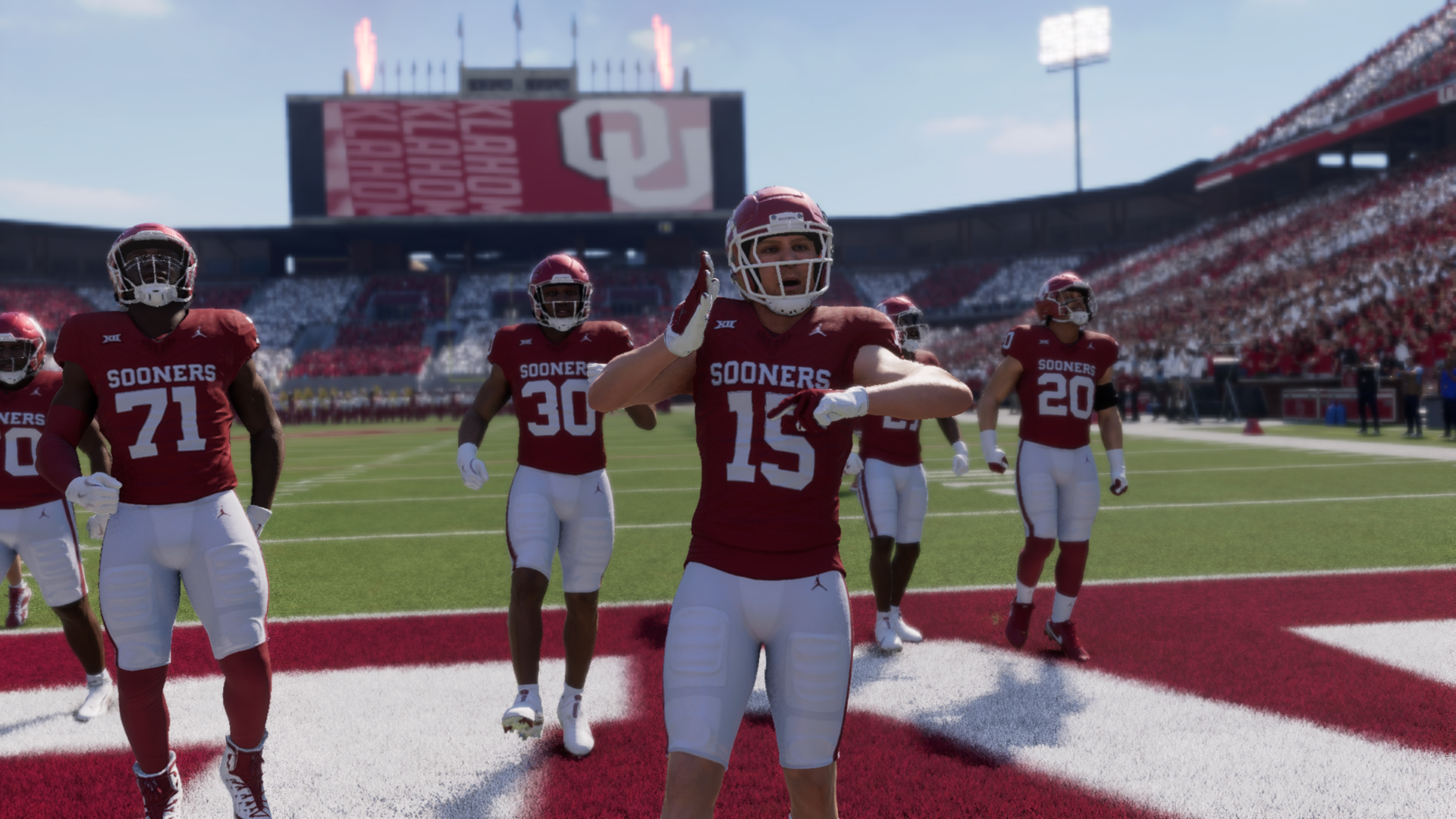
Junior quarterback Tama Amisone, thrust into the spotlight with little fanfare, played like a veteran who had been waiting his turn. He finished the night with 370 passing yards and five touchdowns, carving up Miami’s secondary with timing, patience, and just enough aggression to keep the Hurricanes off balance.
“We told Tama, ‘Don’t be Superman,’” Mahawg said. “Just run the offense, trust the read, and let the ball fly when it’s there. He did exactly that.”
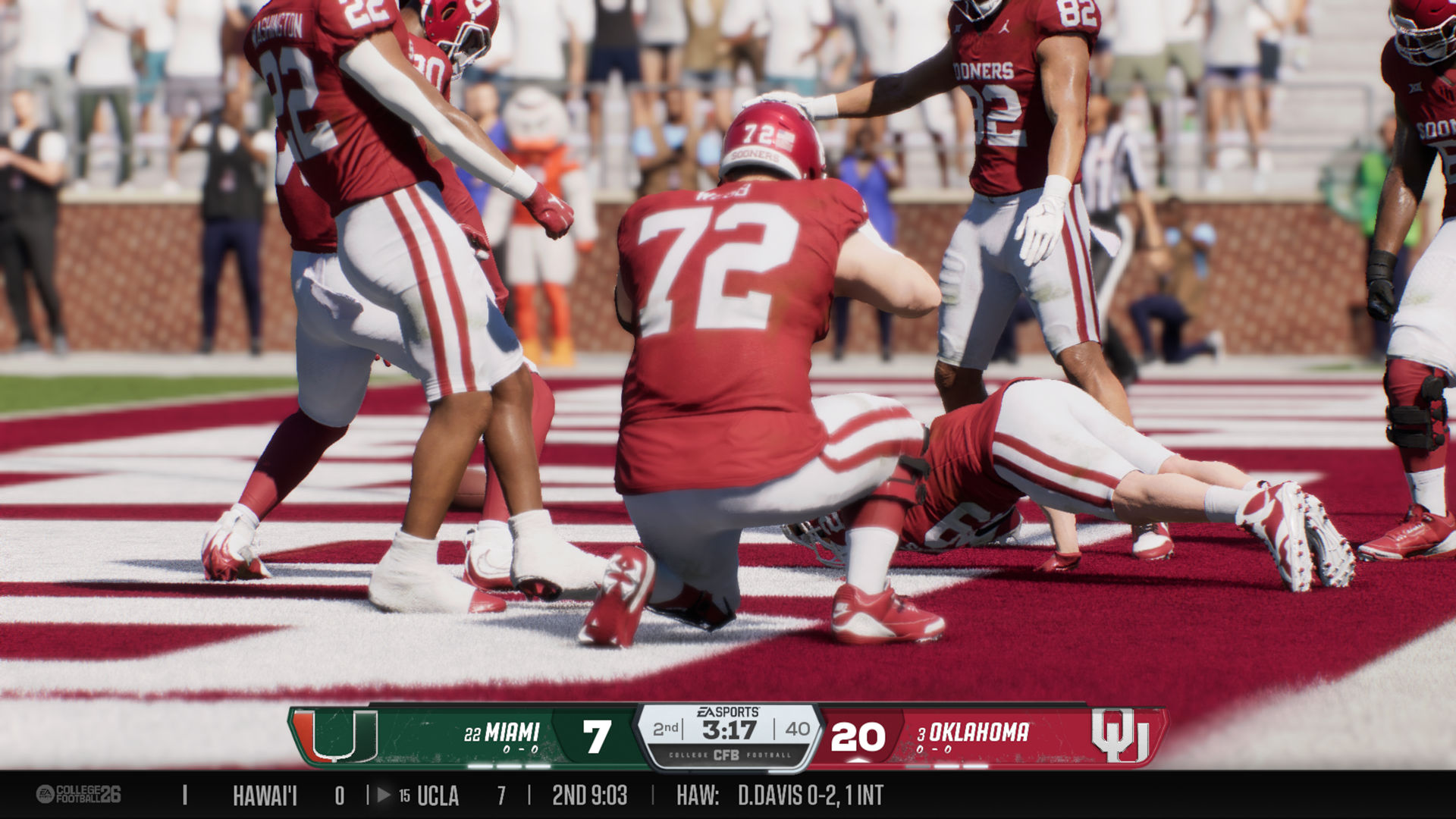
The Sooners scored touchdowns on six of their first seven meaningful possessions, building a 28–7 halftime lead that never felt fluky. Oklahoma spread the field horizontally and vertically, forcing Miami to defend every blade of grass.
Carter and Parms Set the Tone
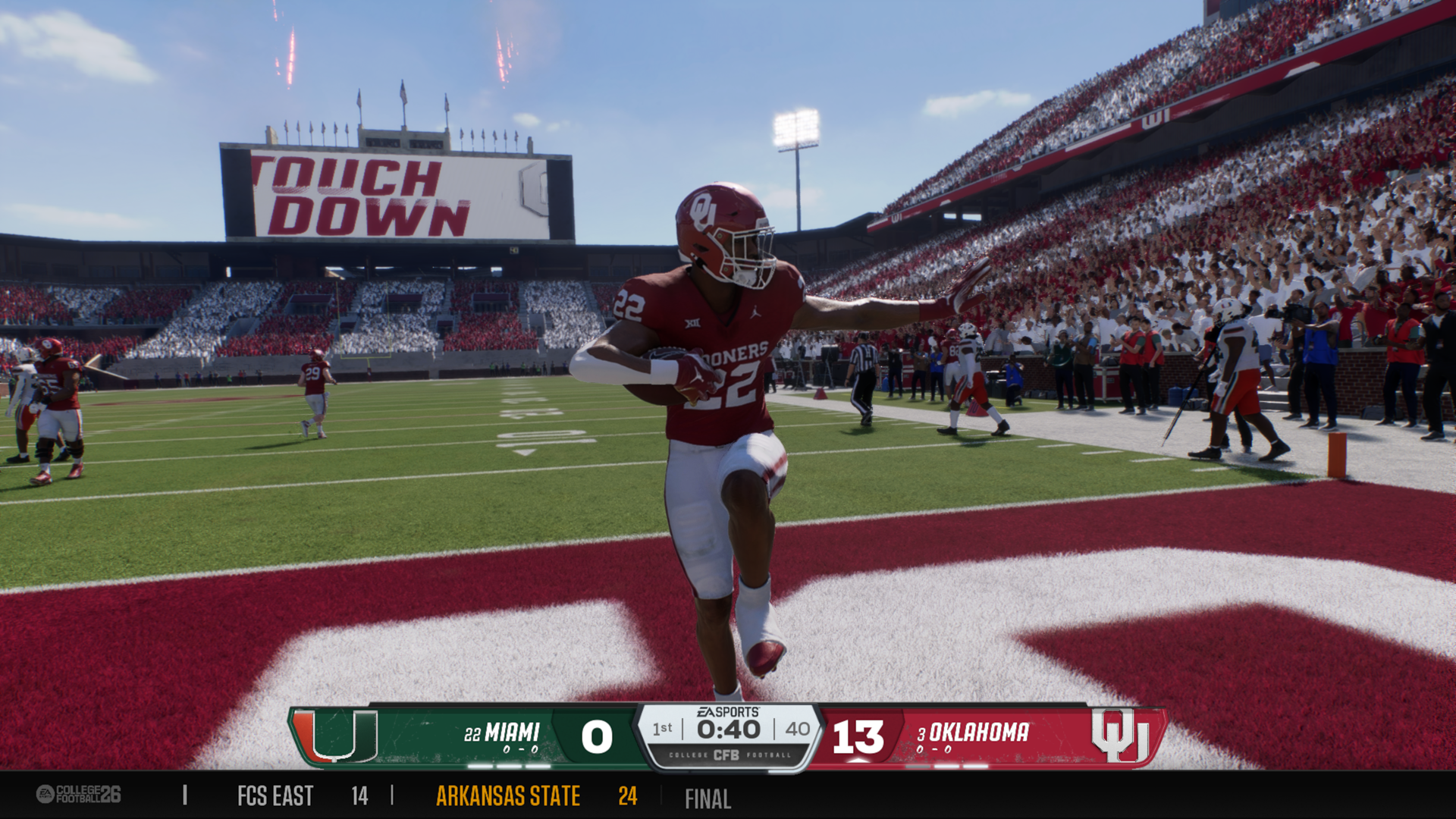
While Amisone distributed the ball, Eric Carter became the offense’s anchor. The junior back piled up 118 rushing yards on 22 carries and added two receiving touchdowns, punishing Miami defenders who overplayed the pass.
“Eric ran angry,” Mahawg said. “That’s what happens when a defense is light in the box. Somebody’s got to pay.”
Wideout Allen Parms delivered the kind of stat line that would’ve made Leach smile: nine catches, 104 yards, and a touchdown, repeatedly finding space in the seams and turning short throws into chain-moving gains.
“This offense only works if the receivers want the ball,” Mahawg said. “Allen wanted it all night.”
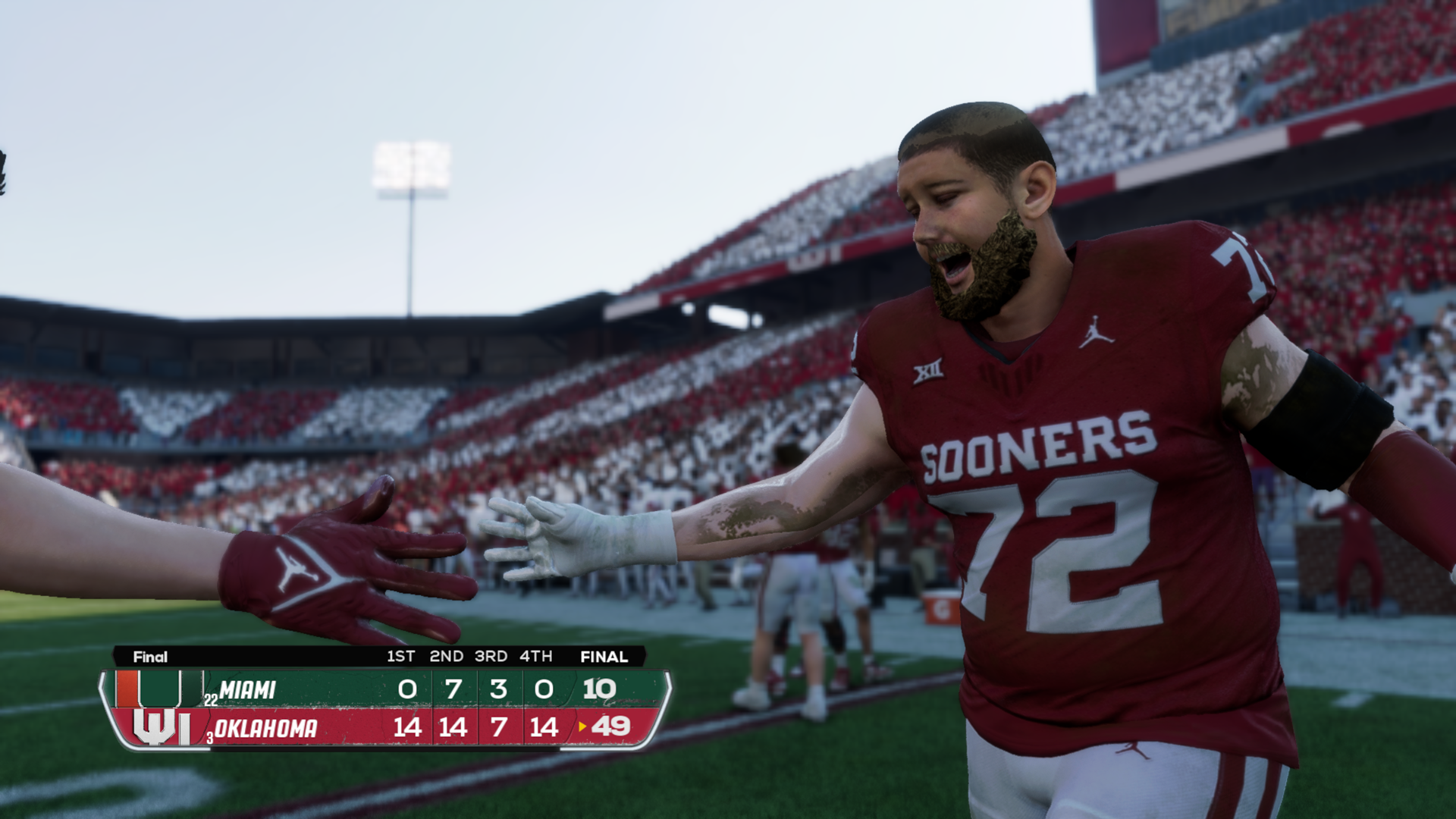
By the time the fourth quarter rolled around, Oklahoma had scored 49 points, outgained Miami by more than 300 yards, and turned what was supposed to be a measuring-stick game into a showcase.
Defense Did Its Job, Quietly and Relentlessly
Lost in the fireworks was a defensive effort that deserves its due. Miami managed just 10 points, with only one sustained scoring drive. Oklahoma’s front controlled the line of scrimmage, while the secondary kept explosive plays to a minimum.
Linebacker James Nesta once again set the tone, leading the team in tackles and consistently closing windows in the middle of the field.
“Defense doesn’t need applause,” Mahawg said. “They need trust. Those guys trusted the scheme and trusted each other.”
The Hurricanes were held to under 300 total yards, struggled on third down, and spent most of the night reacting rather than attacking.
A Statement Without a Victory Lap
For Mahawg, the win was never about Miami alone. It was about proving Oklahoma could adapt without losing its identity.
“We’re not trying to be trendy,” Mahawg said. “We’re trying to be dangerous. This offense lets our players play free, and that matters.”
The Sooners left Week 0 with answers at quarterback, clarity on offense, and momentum heading into a far more uncomfortable test.
What’s Next
Oklahoma now turns its attention to Week 1, when the Sooners hit the road to face a Top 25 North Carolina team in what will be the first real stress test of this new-look attack away from home.
Mahawg knows the honeymoon won’t last.
“They’re going to challenge us,” he said. “That’s good. If you’re not being challenged, you’re not building anything.”
One week into the post-portal reset, Oklahoma looks less like a program in transition and more like one that simply chose a different weapon.
And it’s already sharp.
 OU Didn't Know?
Leave a comment